Overview
The gantry, at the heart of the flow
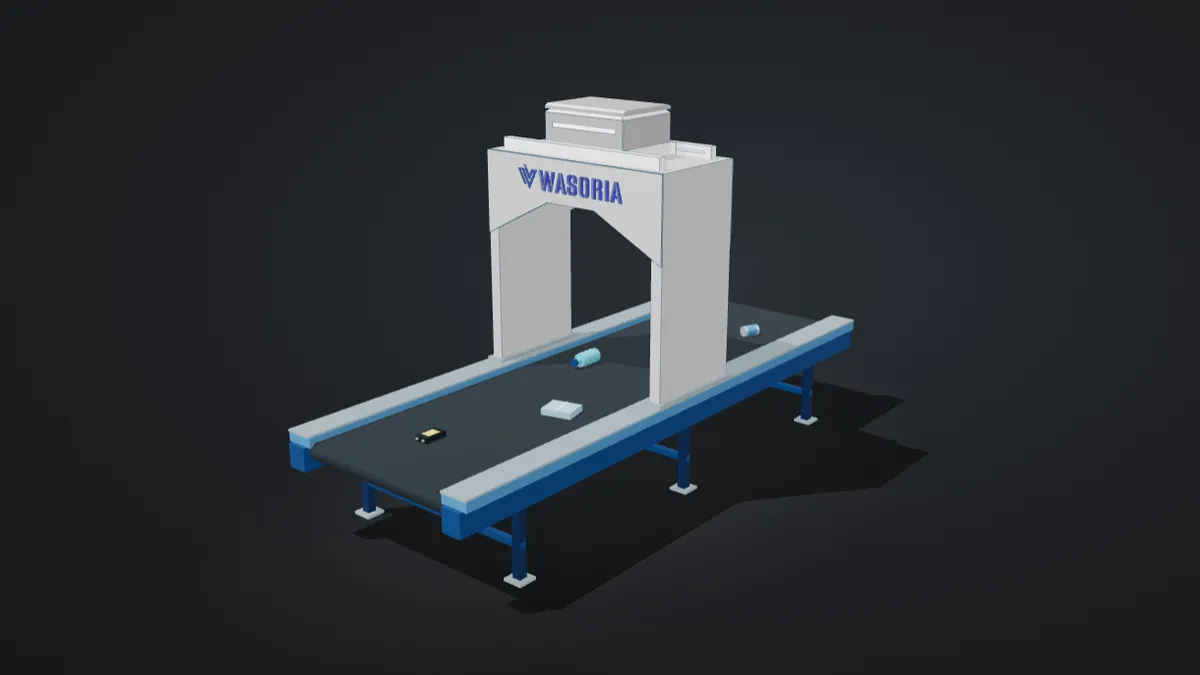
Items travel along the conveyor and pass under the gantry. At its top, the Wasoria Box observes them continuously.
Pick a step to explore the Wasoria Box.
Scroll to go through the steps.
Embedded artificial intelligence for precise and instant detection
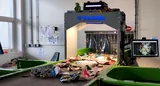
The Wasoria Box is a multi-sensor unit mounted on a gantry above the conveyors. Its AI algorithms, developed and trained on millions of real images from sorting centers, analyze each object in real time: flow composition, sorting quality and dangerous object detection.
Neural networks specifically trained on waste and recyclable materials
Flow analysis directly in the box for real-time decisions
Even in challenging conditions: dust, dense flows
The AI continuously improves through collected data
From passing under the gantry to the alert, step by step
Mounted on a gantry above the conveyor, the Wasoria Box observes every item passing on the belt. Sensors, embedded analysis, maintenance and signaling: explore it in 3D.
Overview
Items travel along the conveyor and pass under the gantry. At its top, the Wasoria Box observes them continuously.
Pick a step to explore the Wasoria Box.
Scroll to go through the steps.
Step 1/6 · Detection
Under the gantry, every item is spotted, identified and tracked: PET bottle, cardboard, can… The analysis runs in real time, on the moving flow.
Step 2/6 · Sensors
The high-resolution RGB camera distinguishes shapes, colors and materials. The thermal sensor completes this reading by observing the heat given off by the items.
Illustrative sensor positions and fields of view.
Step 3/6 · Thermal
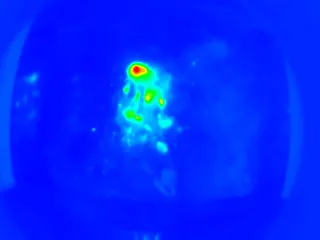
The thermal view brings out items that are hotter than the rest of the flow, such as a damaged battery: a valuable clue for preventing fires.
Illustrative false colors: no measured temperature.
Step 4/6 · Embedded analysis
Images are analyzed directly inside the unit, right next to the sensors, for real-time decisions. The results are then sent to Wasoria Pilot.
Illustrative internal electronics.
Step 5/6 · Maintenance
Mounted on slide rails, the Wasoria Box slides out sideways from the gantry for easier maintenance. Robust and sealed, it is built to work in the dust of sorting centers.
Step 6/6 · Alert
When a dangerous item such as a battery is detected, the light bands of the Box turn red and the alert is sent to Wasoria Pilot: teams can react immediately.
Illustrative 3D model: proportions, internal components, sensor fields of view and false thermal colors are indicative.
Sensors, design, analysis and signaling
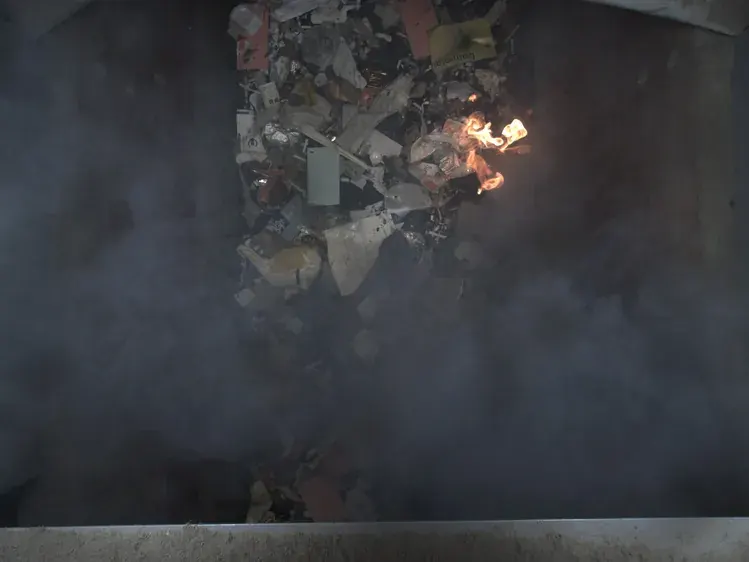

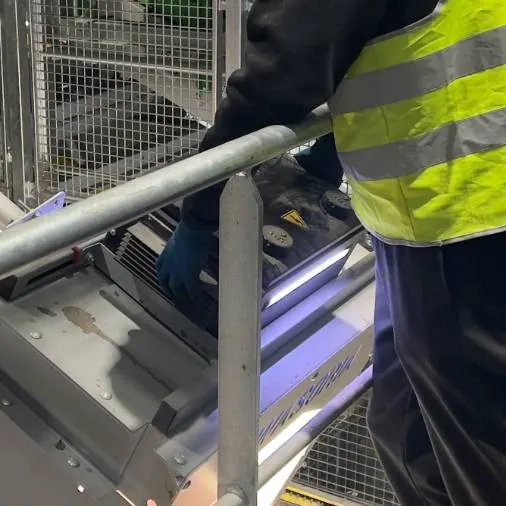


Integrated LED indicator system for instant identification of operational status. Your teams can understand the situation at a glance and react immediately to critical alerts.
One gantry, different roles depending on where it stands
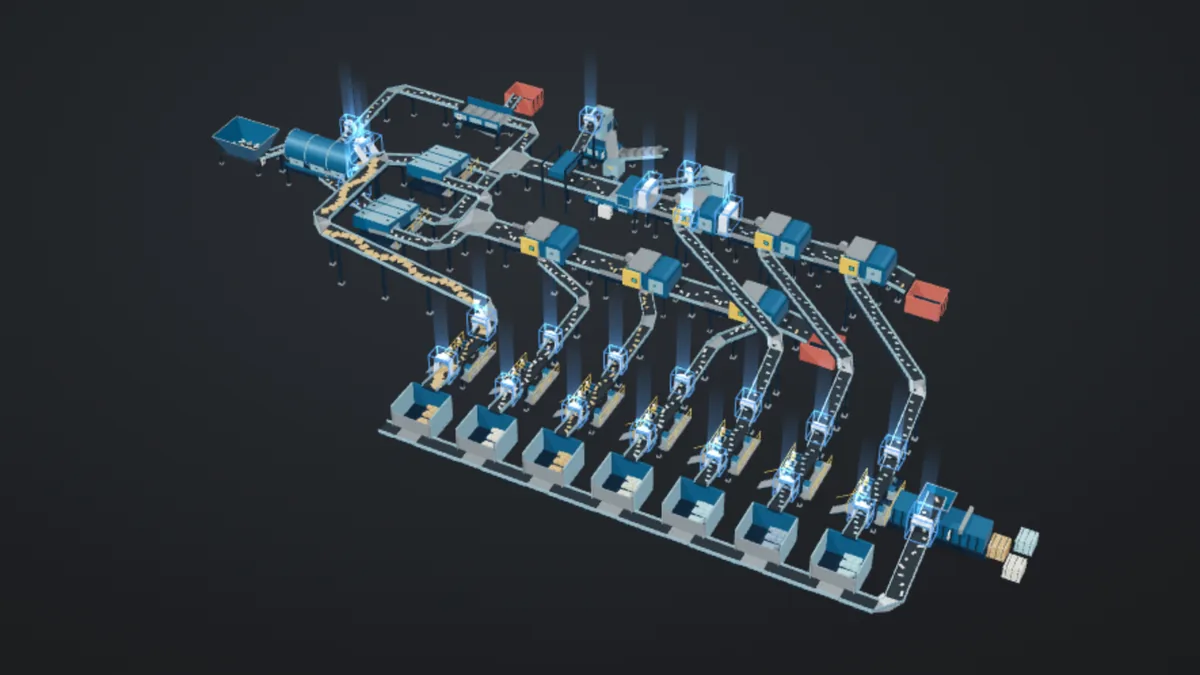
Depending on where it is installed in the sorting center, the gantry meets a different need: measuring incoming material, steering equipment, guiding the teams, checking quality or protecting the presses. Walk through a sorting center in 3D, from the trommel to baling.
Overview
From the trommel to the presses, Wasoria gantries (highlighted) line the process. Each one stands where information is missing to make a decision.
Pick a step to follow the flow.
Scroll to follow the flow.
Step 1/6 · Incoming flows
At the trommel outputs, one gantry on each branch characterizes the incoming flows, before the separation steps.
Step 2/6 · Equipment
Around a piece of sorting equipment, one gantry measures the input while two others watch the outputs: the extracted material and the residual flow.
Step 3/6 · Manual sorting
Before the quality-control sorting tables, the gantries analyze the flow composition to guide the sorters' work.
Step 4/6 · Before storage
After the tables, just before the storage bays, the gantries characterize the material about to be stored.
Step 5/6 · Steel press
Upstream of the steel baling press, the gantry spots incompressible or dangerous items. Where the conveyor drops, a bypass diverts them to a separate bin.
Step 6/6 · Baler
On the conveyor feeding the baler, the gantry analyzes the material just before it is pressed.
Educational 3D model of a typical sorting center: the layout, equipment and number of gantries are illustrative and do not reproduce an actual installation.

See how the Wasoria Box analyzes your waste streams in real time and detects dangerous objects, with a demo on your own streams.