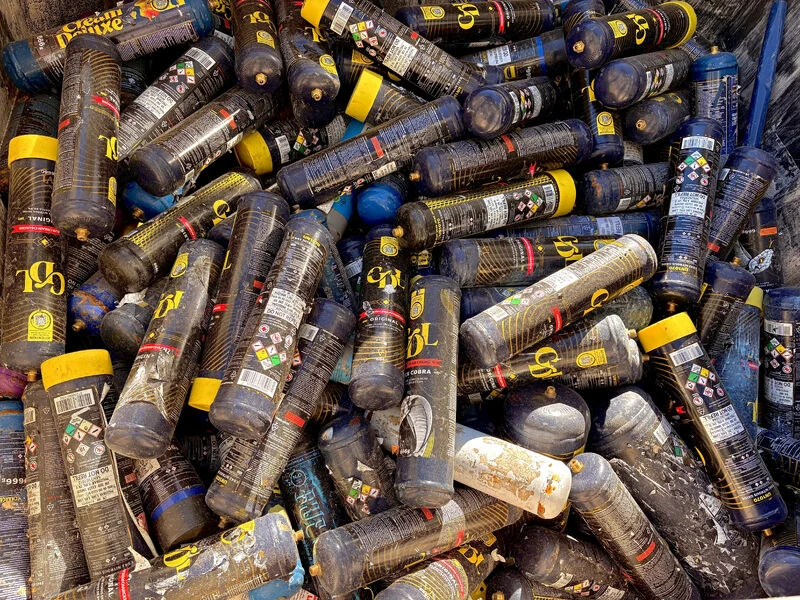
In 2024, exploding nitrous oxide canisters caused 148 unplanned shutdowns at 29 non-hazardous waste incinerators in France, according to a report by the French Ministry of Ecological Transition (BARPI, ARIA database). Once a canister is in the furnace, it is too late: broken grate bars, a line out of service, waste diverted elsewhere. The challenge is to detect these canisters upstream, before they reach the boiler.
Nitrous oxide canisters in incinerators: what the 2024 report shows
In March 2025, the French risk prevention authority asked every incinerator to report the explosions that had forced a line shutdown in 2024. The findings, published in September 2025, are clear:
unplanned shutdowns caused by nitrous oxide in 2024
BARPI, ARIA report, September 2025
- 29 incineration plants affected;
- an average shutdown of 56 hours, up to 227 hours for a single event;
- more than €6.7M in economic impact for the 74 events with known costs, about €90,000 per shutdown on average.
These figures are a floor. As of 1 April 2025, BARPI only had data on 48 of the 119 incinerators in mainland France. And not every explosion leads to a shutdown: one operator recorded 474 explosions on its two lines in 2024, but only 6 shutdowns.
The trend is getting worse. SVDU, the French union of waste incinerator operators, ranks these explosions as the leading cause of incinerator unavailability in France and reports that the first half of 2025 already exceeded the 2024 total.
One incinerator, 19 shutdowns, 980 hours, €1.3M
The most striking case in the report is the Thiverval-Grignon incinerator, west of Paris. On 1 January 2024 at 4:07 a.m., canisters exploded in a furnace and broke grate bars. The line stayed down for 46 hours.
That was only the first episode. Over the year, the plant suffered 18 more unplanned shutdowns from the same cause. In total:
- 980 hours of unavailability on one incineration line;
- 11,553 tonnes of waste not incinerated;
- 6,087 MWh of electricity not generated;
- a cost of around €1.3M.
These events account for more than half of the plant's unplanned shutdowns that year. Beyond repairs, waste awaiting treatment has to be stored or diverted, sometimes to other sites, which means extra transport.
Why do canisters go undetected?
A nitrous oxide canister weighs next to nothing compared with the tonnes of waste tipped into the bunker every day. The operators surveyed by BARPI all say the same thing: spotting a canister in several tonnes of waste is hard. Random truck inspections before tipping give poor results, because canisters stay hidden inside household waste bags.
The danger comes from canisters that are not completely empty. In the heat of the furnace, the remaining gas builds up pressure until the casing bursts. Empty canisters pass through combustion and end up in the bottom ash.
Capturing canisters before the furnace
One of the measures listed by BARPI is better sorting of these canisters in the sorting centers, transfer stations and consolidation sites upstream of incinerators. That is where Wasoria works: every canister removed from a sorting line is one that will not end up in the residues sent to energy recovery.
The Wasoria Box, mounted on a gantry above the conveyor, combines an RGB camera, a thermal sensor and embedded artificial intelligence. It spots every dangerous object in real time and alerts the operator, who removes it from the stream.
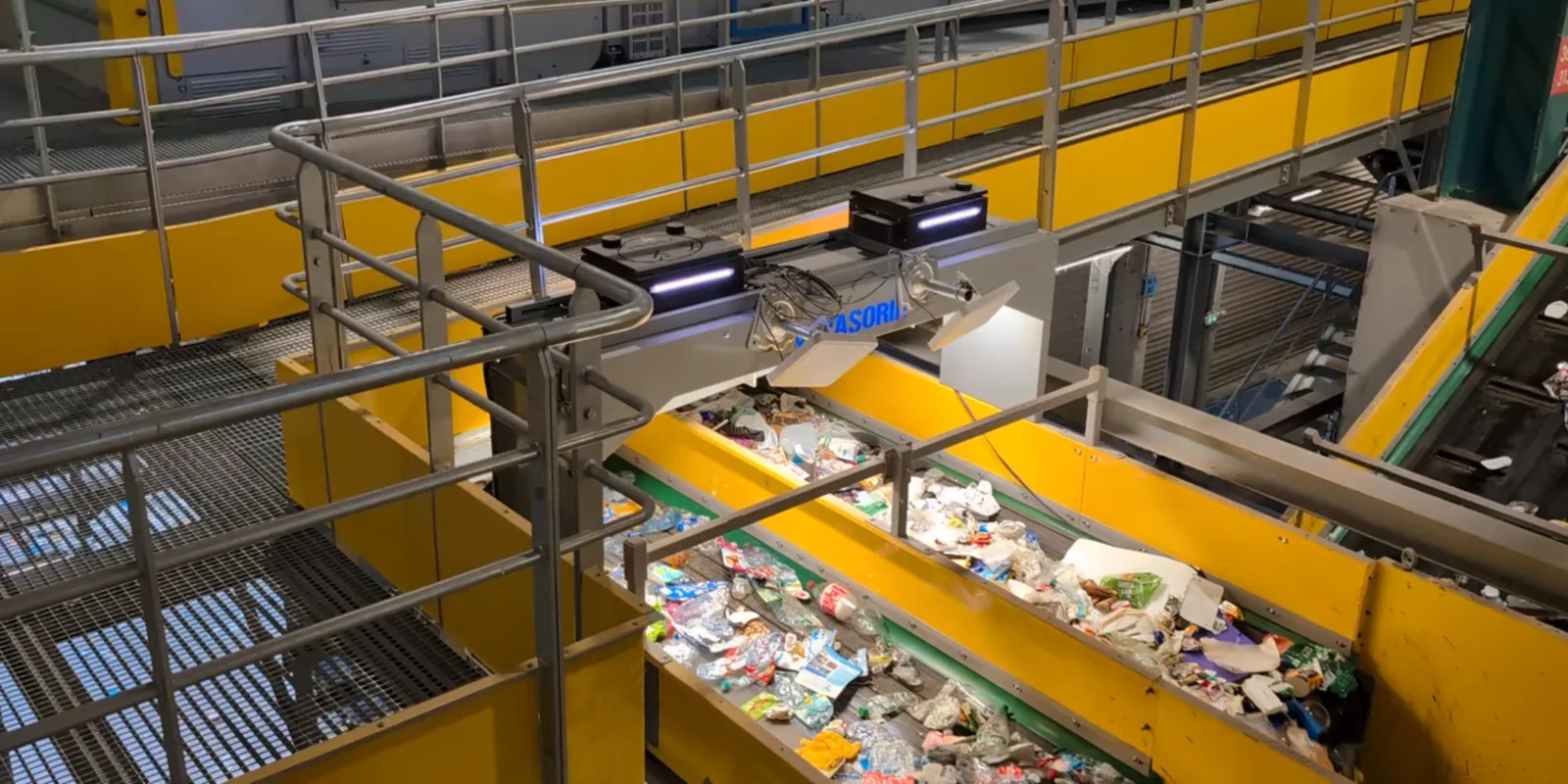
detection rate for gas cylinders and nitrous oxide canisters
Elcimaï certification
Depending on the sorting center, 10 to 60 nitrous oxide canisters are extracted every day at equipped sites. Around forty gantries are now in operation across France.
This detection does not replace prevention at the source: canisters belong at recycling centers, never in household waste or the recycling bin. It provides a safety net for waste streams that go through a sorting center.
Frequently asked questions
Why does a nitrous oxide canister explode in the furnace?
When a canister still contains gas, the furnace heat raises the internal pressure until the metal casing ruptures. The explosion damages grate bars, refractory linings or boiler tubes.
Do all canisters explode?
No. Completely empty canisters do not explode and come out in the bottom ash. Counting them shows the scale of the problem: in 2023, one incinerator found an average of 60 canisters per day in its bottom ash over a 15-day period (source: BARPI).